
Research
Aggregating research to assist in improving health outcomes for Indigenous Populations
Call for Data
Call out to First nations, Métis, Inuit and Indigenous WOMEN’S HEALTH RESEARCHERS FOR research AND RECOMMENDATIONS TO INFORM A NATIONAL STRATEGY
The Women’s Health Collective Canada (WHCC) has published Leading Beyond the GAP: Closing the Women’s Health Gap in Canada: A Blueprint for Action highlighting gender inequity in health. Documents such as these are shaping the conversation around Bill S-243 – An Act to establish a national framework for women’s health in Canada.
According to their analysis, more than 75% of the gap is driven by cancer, heart disease and brain disorders, including substance use. Therefore, five conditions were prioritized to close the women’s health gap in Canada: cancer, cardiovascular diseases, brain and mental health, hormonal health and menopause, and chronic pelvic pain. The report also notes the lack of availability and maturity of data related to women’s health. Lastly, it states that interventions need to reflect disparities across Canada’s diverse communities, including Indigenous peoples.
If we were to create an Action Plan for Reclaiming Health Sovereignty for First Nations, Métis, and Inuit women in Canada, what would be in it?
Please note that as defined by Senator Henkel, this bill is based on four complementary pillars:
- Understanding: Improving research, data collection, and knowledge sharing regarding conditions that uniquely or disproportionately affect women across their lifespans.
- Preventing: Emphasizing proactive health measures, early detection, and risk reduction to close longstanding gaps in women’s health outcomes.
- Training: Enhancing education and specialized training for healthcare professionals to reduce misdiagnoses and improve standards of care.
- Coordinating: Unifying Canada’s fragmented healthcare approach by establishing transparent monitoring, regular national conferences, and making women’s health a permanent item for health ministers
In this form we will ask to which of these pillars your research applies.
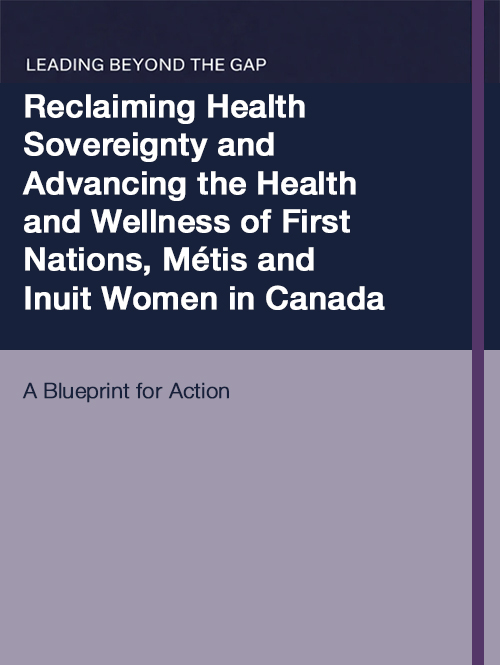
Proposed: Our vision to create a document that lays out a national strategy to lead beyond the gap of both gender and race inequity, informed by our research and work in communities.